
What is Pjax.js?
Pjax.js is a JavaScript library that enables fast, seamless page navigation by using AJAX to load and replace content within a webpage without refreshing the entire page. It enhances user experience by maintaining smooth transitions and preserving the browser history. Pjax.js is commonly used to improve website performance and responsiveness by only updating the necessary parts of a page. It is particularly useful in single-page applications (SPAs) and Webflow projects where dynamic content loading is needed while keeping navigation intact.
What are some effective ways to implement Pjax.js for seamless page transitions in Webflow?
To implement Pjax.js in Webflow for seamless page transitions, first, add the Pjax.js library via a CDN in your project settings. Then, wrap your main content in a container div with a unique ID and specify this target in your Pjax initialization script. Use event listeners to manage animations, such as fade-ins or page-loading overlays, ensuring a smooth transition between pages. You can also preload assets for better performance. To maintain Webflow interactions and scripts, reinitialize them after new content loads. Properly structure your content containers and scripts to ensure seamless navigation while keeping Webflow functionality intact.
What are the best Webflow cloneables that incorporate Pjax.js for seamless page transitions?
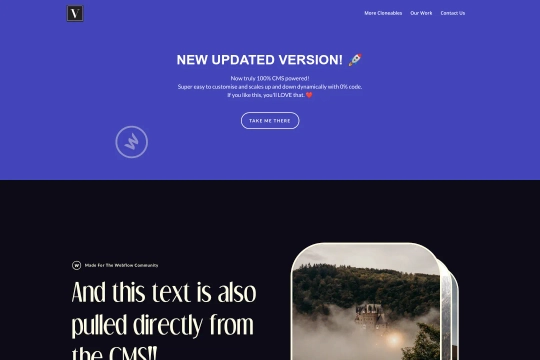
There are no Webflow cloneables listed that specifically incorporate Pjax.js for seamless page transitions. The provided cloneable, Dynamic CMS Stacked Slider, focuses on creating engaging sections with a stacked slider effect rather than implementing Pjax.js for smooth navigation.
If you're looking for seamless page transitions using Pjax.js in Webflow, I recommend searching for cloneables explicitly designed for page transitions or leveraging Webflow interactions and JavaScript integrations tailored to Pjax.js. Let me know if you need further recommendations!