Build Visual AI Agent Workflows with Sim AI Webflow App
Build and deploy AI agent workflows for Webflow projects with Sim AI’s visual, no-code canvas.
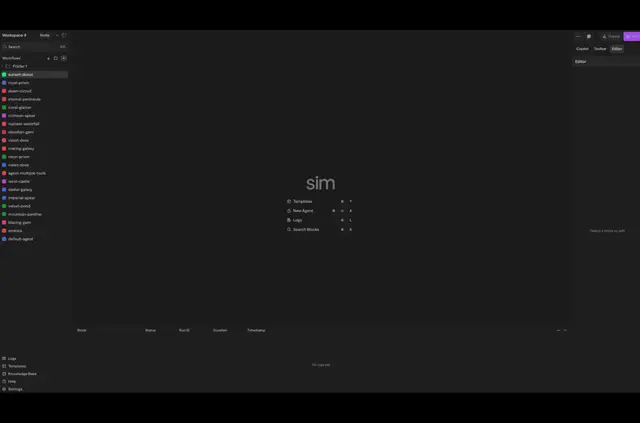
Teams building Webflow sites can use Sim AI to create workflows that act on connected services, draw on conversation history, or pause for human review. Its drag-and-drop canvas supports visual building without code, and an AI Copilot can create workflow nodes from natural-language prompts.
Sim is an open-source tool that connects to AI models and more than 126 integrations, including databases and services used by teams.
From install to first use
Install Sim AI, then build a workflow by arranging nodes on its visual canvas. The AI Copilot can create nodes from natural-language prompts, so teams can assemble workflows without writing code. Sim supports deploying workflows once they are built.
Pricing and permissions
Sim is offered with a free option and paid plans. When installed in Webflow, it requests permission to edit CMS content and sites. The access request covers those two areas.
What's included
Sim includes tools for connecting models, retrieving information, triggering workflows, and reviewing execution activity.
- Connect workflows to OpenAI, Anthropic, or Google Gemini models.
- Use vector databases for retrieval-augmented generation and knowledge management.
- Keep conversation memory across interactions that take multiple turns.
- Trigger workflows on a schedule or with RSS feeds and webhooks, and include human review steps.
- Choose from over 126 integrations, including Slack, GitHub, Google Workspace, Salesforce, and databases.
Quick answers about Sim AI
Can Sim AI be hosted on a team's own infrastructure?
Yes. Sim can be self-hosted or deployed in the cloud.
Can teams inspect workflow runs while they execute?
Yes. Real-time execution monitoring lets teams inspect workflow runs.
Can workflows start from an RSS feed?
Yes. RSS feeds are among the available workflow triggers.
Which AI models can Sim workflows connect to?
Sim connects to OpenAI, Anthropic, and Google Gemini models.